
Performance Max: What It Is and When It's the Right Campaign Type
How Performance Max works across Google's channels, which goals it's best for, and how to give it the right inputs.
Performance Max, often called PMax, is Google's most automated campaign type. One campaign can show your ads across Search, Shopping, YouTube, Display, Gmail, Discover, and Maps, and Google decides where and when to show them based on your goal.
When it's set up well, Performance Max can find customers you'd miss with any single channel. When it's set up poorly, it can spend money on low-quality traffic. The difference comes down to the inputs you give it.
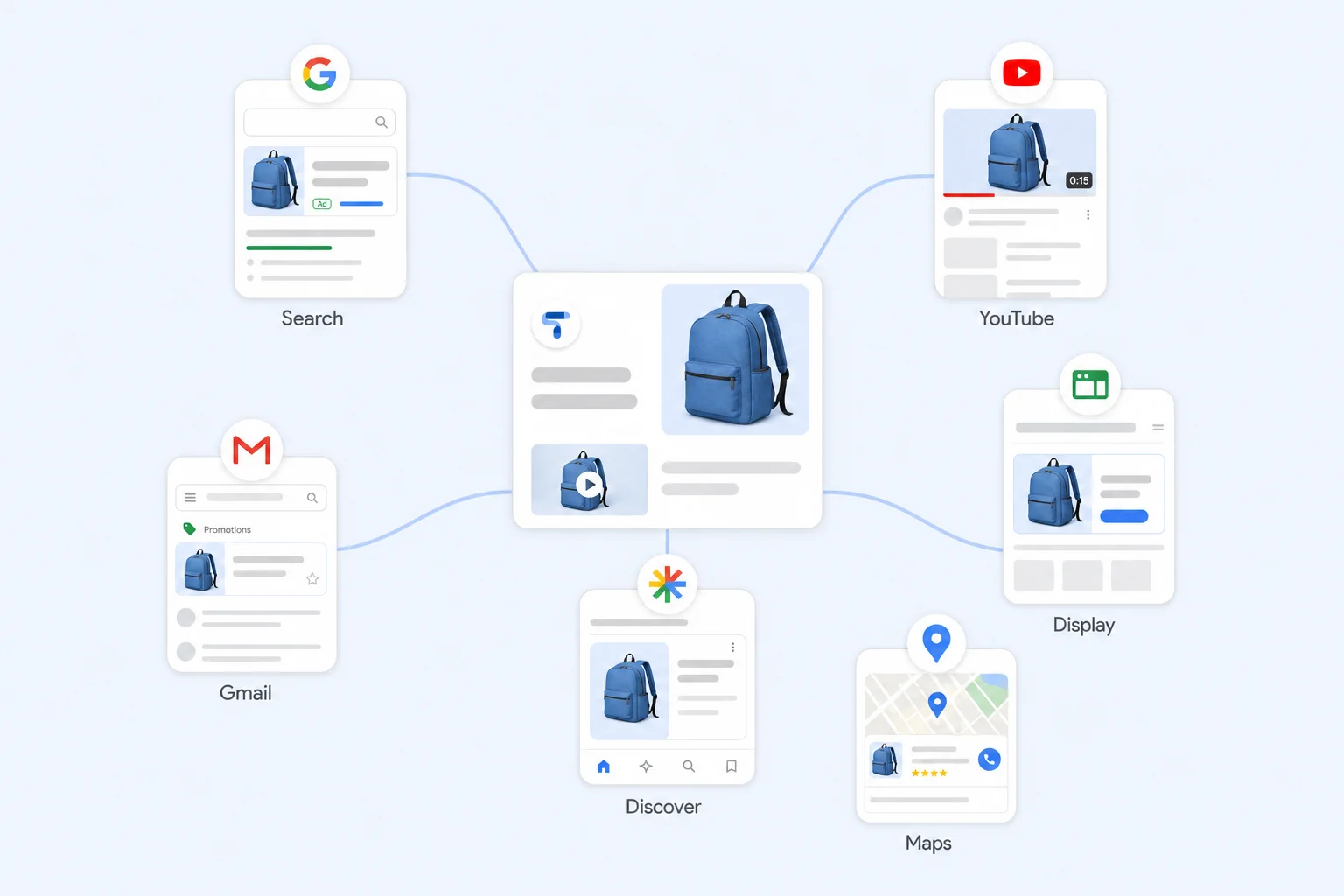
How Performance Max Works
Instead of keywords and placements, you give Google a goal, a budget, and a set of creative assets. Google uses its AI to decide which channel, audience, and ad format will most likely lead to a conversion.
- Asset groups: collections of headlines, descriptions, images, videos, and logos. Google mixes them to build ads for each channel.
- Audience signals: hints about who your customers are, like your customer lists, website visitors, or custom segments. They help Google get started faster, but Google can show ads to people outside them.
- Search themes: optional topics that tell Google what your business offers so it can find relevant searches.
- Product feed: for ecommerce, a linked Merchant Center feed lets Performance Max show Shopping ads for your products.
What Performance Max Is Best For
- Online sales: with a product feed, Performance Max is one of the strongest campaign types for ecommerce. Paired with Shopping, it's usually the core of an online store's account.
- Phone calls and leads: Performance Max can drive calls and form leads by reaching people on Search, Maps, and YouTube. It works best alongside a Search campaign that covers your most important keywords.
- Store visits and local actions: businesses with physical locations can use Performance Max to drive directions, calls, and visits through Maps and other local placements.
- Scaling beyond Search: if your Search campaigns are limited by search volume, Performance Max can find more customers on other channels.
Why Inputs Matter So Much
Performance Max learns from the conversions you track. If you count low-value actions, like page views or newsletter sign-ups, it will find more of those instead of real customers.
- Conversion goals: optimize for actions that matter, like purchases, qualified leads, or calls of a certain length.
- Conversion values: track revenue for sales, and consider assigning values to leads so Google can tell good leads from weak ones.
- Creative: provide a full set of assets, including real photos and at least one video. If you skip video, Google may create one automatically.
- Audience signals: start with your customer lists and website visitors, which are often the strongest signals.
Pros and Cons
The biggest strengths of Performance Max are reach and automation. It can test combinations across channels faster than any person could and often finds new customers efficiently.
The tradeoff is control and visibility. You can't choose exact keywords or placements, and reporting is less detailed than Search or Shopping. Google has added more reporting over time, including channel performance and search term insights, and you can use brand exclusions and negative keywords to keep spend focused.
How to Set Up Performance Max
- Get tracking right first: confirm your primary conversions are accurate before launch.
- Build asset groups by theme: separate product categories or services so ads and audience signals match.
- Exclude your brand if needed: brand exclusions keep Performance Max from taking credit for people already searching for you, which your Search campaign can cover.
- Give it time: allow several weeks of learning before judging results or making big changes.
- Watch lead quality: for lead generation, check that leads are real and consider importing offline conversions so Google learns which leads become customers.
Common Mistakes
- Launching with weak or missing conversion tracking.
- Uploading only a few low-quality images and no video.
- Optimizing for soft conversions like page views.
- Letting Performance Max capture branded searches without realizing it.
- Making big changes every few days during the learning period.
Final Thoughts
Performance Max is a strong choice for online sales, phone calls, and leads, especially when it runs alongside Shopping or Search. Give it accurate conversion data and quality creative, and it can become one of the best-performing campaigns in your account.
At Uppertier Marketing, we build Performance Max campaigns with clean tracking, strong asset groups, and the right exclusions so spend goes toward real customers. If you want to get more from Performance Max, schedule a call with our team.


